
Building Fire Safety: Why Non-Combustible Enamel Wall Panels Are Essential Post-Grenfell
In modern architectural design, the exterior cladding is often referred to as the "skin" of a building. However, several shocking international fire tragedies have taught us a severe lesson: if this "skin" is combustible, it can instantly become a deadly fuse. For architects and developers striving for sustainability and safety, deeply understanding the fire-resistance ratings of building materials is not just a regulatory requirement—it is a lifelong commitment to human safety.
The Fatal Cost: When Cladding Becomes a Deadly Hazard
1. The 2017 Grenfell Tower Fire (London)
On June 14, 2017, a devastating fire engulfed the 24-story Grenfell Tower in London. What started as a small, localized fire rapidly spread across the entire building in a matter of minutes, tragically claiming 72 lives.
- The Fatal Cause: During a renovation, the building was fitted with Aluminum Composite Panels (ACP) containing a polyethylene (PE) core. In a fire, this plastic core melts, drips, and fuels the flames. Combined with the "chimney effect" created by the air gap between the cladding and the structure, the fire spread uncontrollably upwards.
- The Lesson: Traditional organic materials (like plastics and standard painted coatings) degrade rapidly under high temperatures. If fully inorganic, non-combustible panels—such as Vitreous Enamel (VE) panels—had been used, their extremely high melting point would have effectively halted the vertical spread of the fire.
2. High-Density Urban Residential Fires
Similar tragedies have occurred in high-density Asian cities, such as the fire at Wang Fuk Court in Hong Kong, where flames rapidly ascended via exterior decorative materials. These cases repeatedly prove that once a high-rise building catches fire, external rescue efforts struggle to reach upper floors. Therefore, a building's "Passive Fire Protection" is the absolute last line of defense.
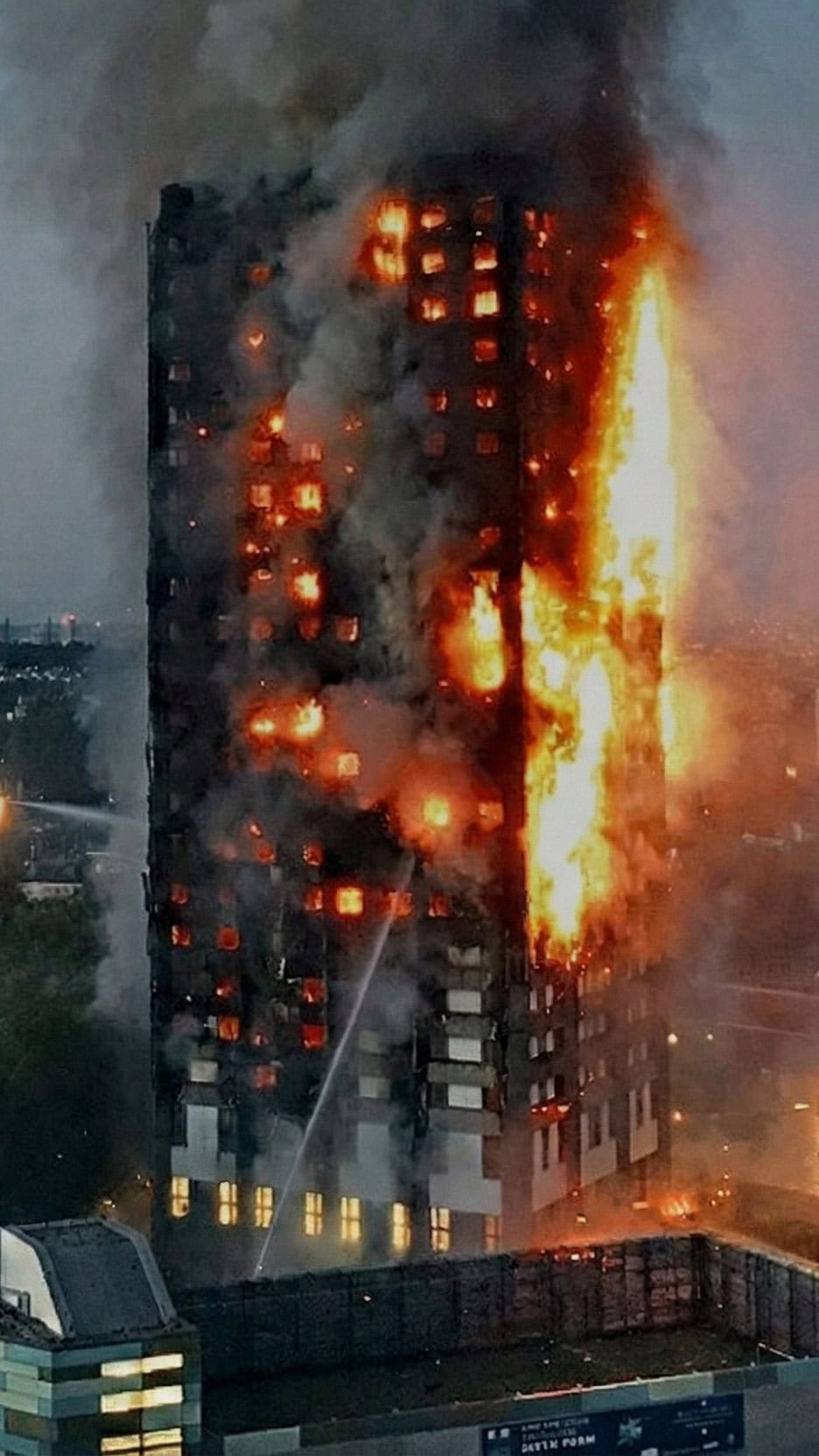
The 2017 Grenfell Tower tragedy starkly demonstrated how combustible PE core panels and the "chimney effect" can accelerate fire spread in high-rise buildings.

In stark contrast to combustible materials, TECO's A1 fire-rated vitreous enamel panels provide both stunning modern aesthetics and uncompromising life safety.
Why TECO Vitreous Enamel Panels Exceed International Safety Standards
Addressing the lethal risks of "combustibility" and "toxic smoke" highlighted in the cases above, Taiwan Enamel Company (TECO) manufactures VE wall panels that fuse vitreous enamel glaze with high-strength steel. This completely inorganic structure delivers flawless performance in the world's most rigorous fire tests:
1. Ultimate Non-Combustibility: Certified by Taiwan, UK, and EU Standards
TECO enamel panels remain structurally stable under extreme heat, do not contribute to combustion, and have achieved the highest authoritative certifications:
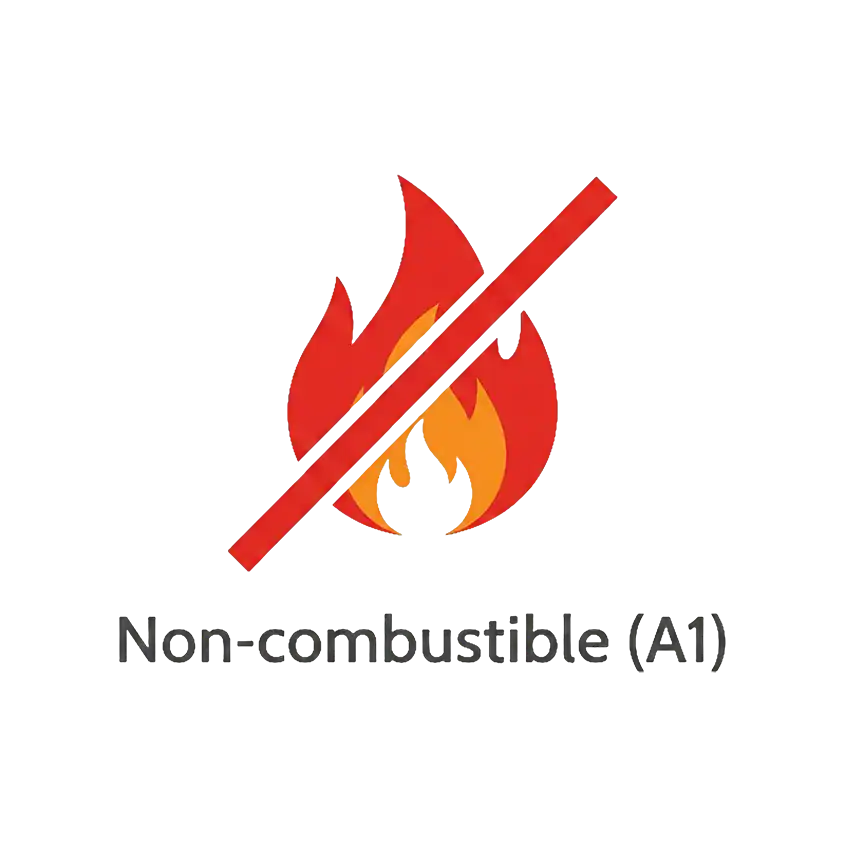
- EU Standard (EN 13501-1): Achieved the highest A1 Grade (Non-combustible) rating.
- UK Standard (BS 476 Part 4, 6, 7): Achieved the highest Class 0 rating, far exceeding standard fire resistance.
- Taiwan Standard (CNS 6532): Passed as a Class 1 Fire-Resistant building material.
2. Zero Toxic Smoke Emission: The Crucial "0.00" Metric
In enclosed spaces (such as metro stations, tunnels, and high-rise evacuation zones), toxic smoke is the leading cause of fatality. TECO panels underwent the highly stringent BS EN 45545 Part 2 (Toxic Smoke Release due to Fire) test for railway applications and delivered outstanding results:
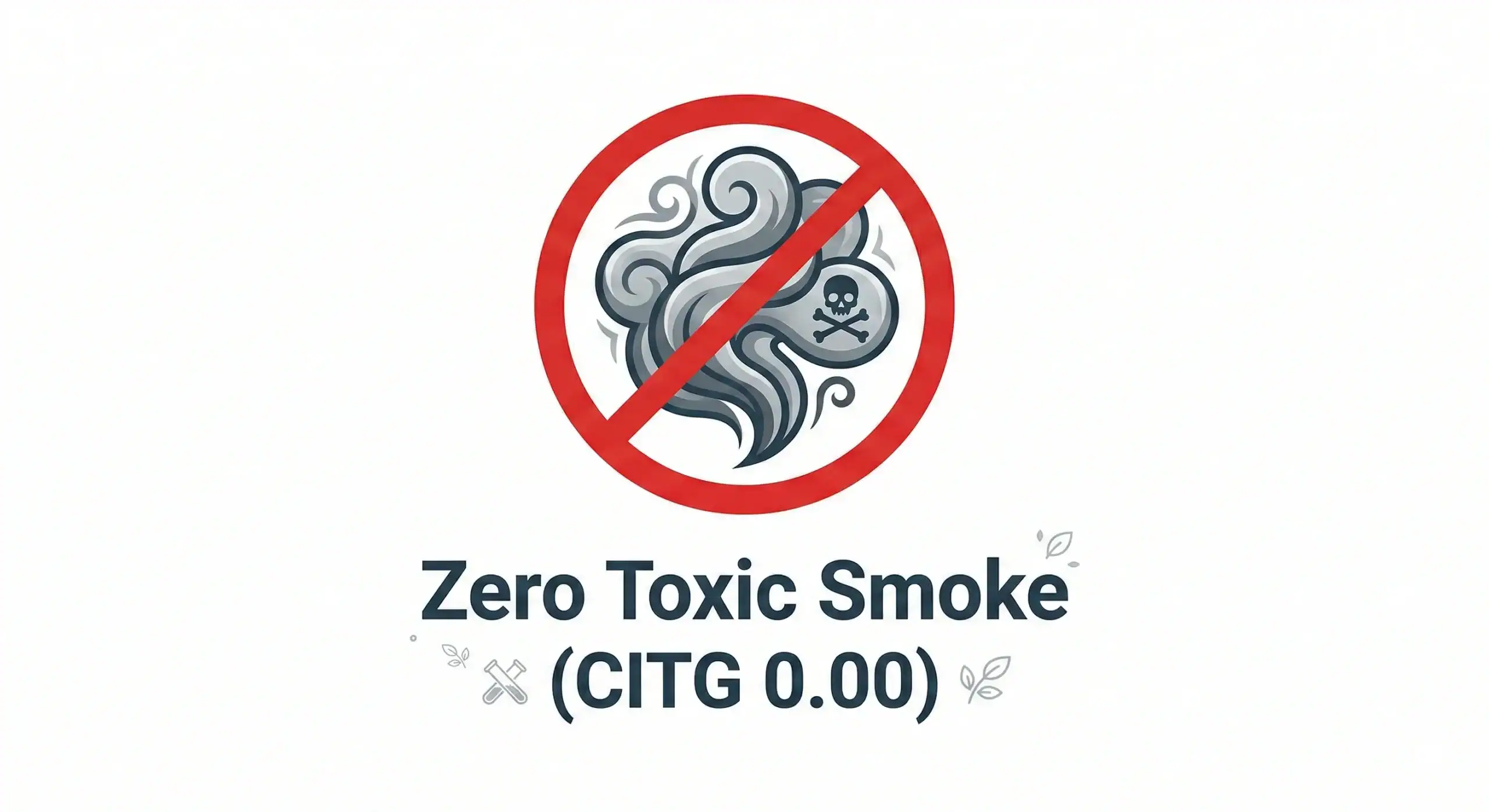
- CITG at 240 seconds: 0.00
- CITG at 480 seconds: 0.00
This means that during the critical 4 to 8-minute window after a fire breaks out, the material releases zero toxic gases, preserving the purest possible breathing environment for safe evacuation.
Seeing is Believing: The 1000°C Torch Test
Performance Comparison: TECO Vitreous Enamel Wall Panels vs. Traditional ACP
Category | TECO Vitreous Enamel Wall Panel | Standard ACP / Painted Aluminum Panel |
|---|---|---|
Inorganic Non-combustibility (A1 Grade Non-combustible Certification) | ✅ Inorganic glass + metal panel / Non-combustible | ❌ Contains combustible core / organic coating |
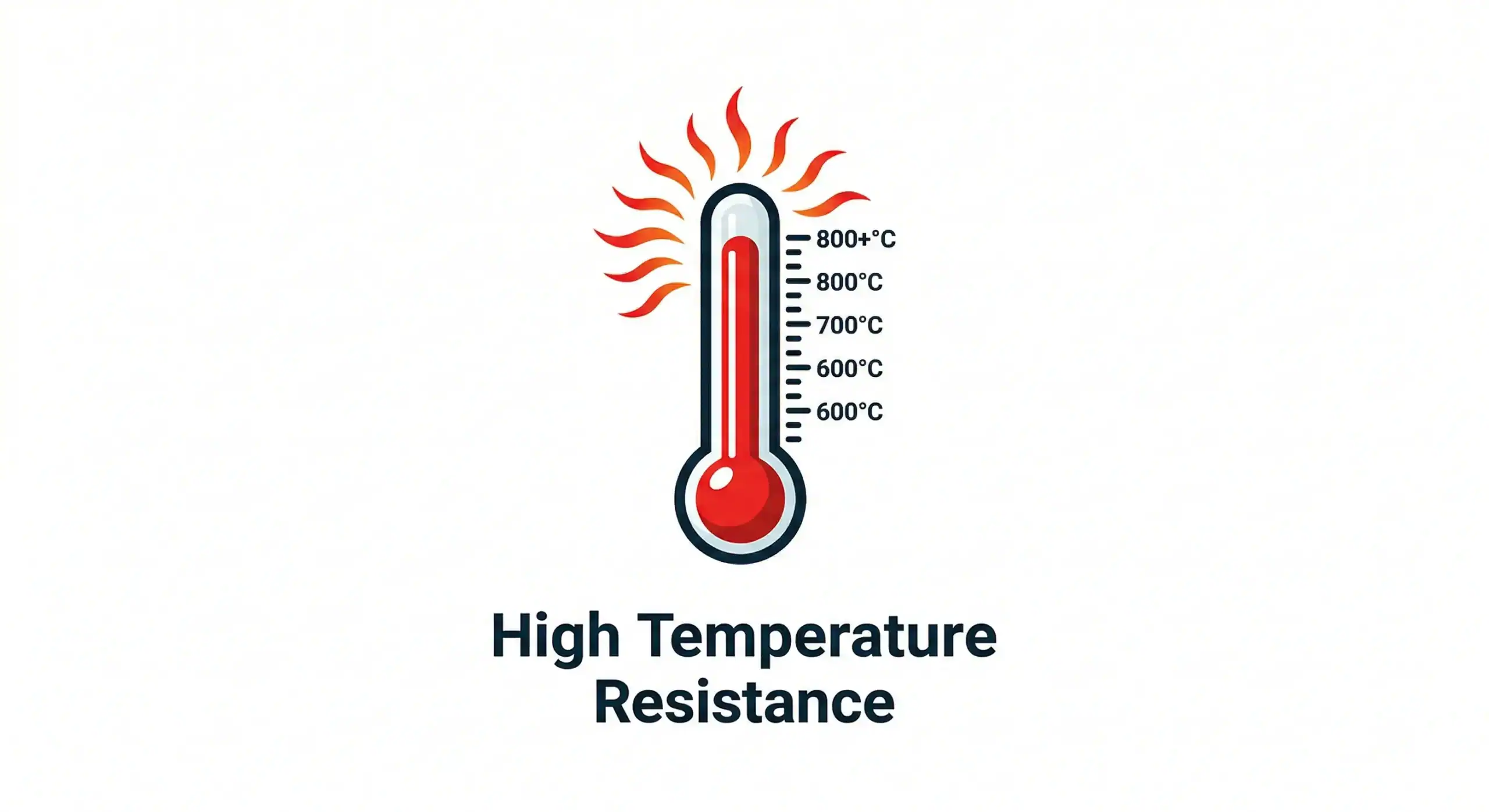
Reaction to Heat | ✅ Structurally stable at high temperatures, no melting | ❌ Produces melting drips, fuels fire |
Toxic Smoke Release (CITG) | ✅ Zero smoke emission, non-toxic | ❌ Highly toxic dense smoke, Dioxin risk |
Core Structure | ✅ Inorganic Glass + Steel Panel | ❌ Orgranic Coating + Plastic Core |
Conclusion: A Choice for Aesthetics and Life Safety
The tragedies of Grenfell Tower and Wang Fuk Court remind us that every line drawn by an architect directly impacts human lives. By specifying TECO’s comprehensive fire-resistant Vitreous Enamel solutions, you ensure your projects easily comply with strict fire codes while providing world-class safety guarantees for the community.
Are you planning a public infrastructure project or a premium commercial building with high safety requirements?
Contact TECO today to request our complete BS, EN, and CNS fire test reports and receive expert technical support for your next project.


