
Modern mass rapid transit (MRT) stations are demanding architectural environments. Everyday operations subject station walls to non-stop physical contact, heavy passenger foot traffic, baggage impacts, harsh chemical cleaning, and frequent commercial advertising wrap turnover.
Conventional wall finishes—such as painted aluminum plates, powder-coated sheet metal, and composite panels—frequently suffer from premature surface failure. For government transit authorities (e.g., DORTS, LTA), engineering consultants, architects, and EPC contractors, specifying the right cladding is essential to avoiding costly mid-cycle replacements.
TECO Vitreous Enamel (VE) Panels—also known as porcelain enamel panels—provide a inorganic, glass-fused-to-steel cladding solution engineered to withstand extreme transit conditions for over 50 years.
The Failure Modes of Conventional Painted Metal Cladding in Transit Hubs
Observation of long-term station operations reveals clear pattern failures in standard painted or fluoropolymer-coated metal panels:
Conventional Coating Failure (Organic Paint / Powder Coating) |
|---|
Soft surface (Pencil Hardness 2H-3H) |
Adhesive vinyl tears paint off |
Solvents cause resin hazing |
Micro-scratches accumulate dirt |
vs.
TECO Vitreous Enamel Solution (Inorganic Fused Glass Surface) |
|---|
Glass-hard surface (Mohs 5-6) |
100% chemical-bonded to steel |
Immune to solvents & chemicals |
Non-porous, anti-graffiti surface |
1. Severe Friction Abrasion and Coating Delamination
Around staircase runs, escalators, and narrow corridors, continuous friction from commuter bags, jackets, and hand contact strips away organic paint coatings over time. Once the outer resin breaks down, the underlying metal is exposed to humidity, leading to chalking, oxidation, and unsightly gray patches.

Staircase wall panels subject to constant friction from passenger clothing and bags experience severe coating wear and discoloration. TECO vitreous enamel panels eliminate this friction damage with Mohs 5–6 surface hardness.

Handrail zones endure intense hand friction and repeated chemical sanitization, completely stripping conventional organic paint down to the substrate over time.
2. Platform Column Impact and Base Peeling
Platform columns endure repeated low-level impacts from luggage wheels, strollers, and motorized cleaning equipment. Conventional paint films lack the impact resilience required at column bases, resulting in chipping, localized flaking, and paint delamination.
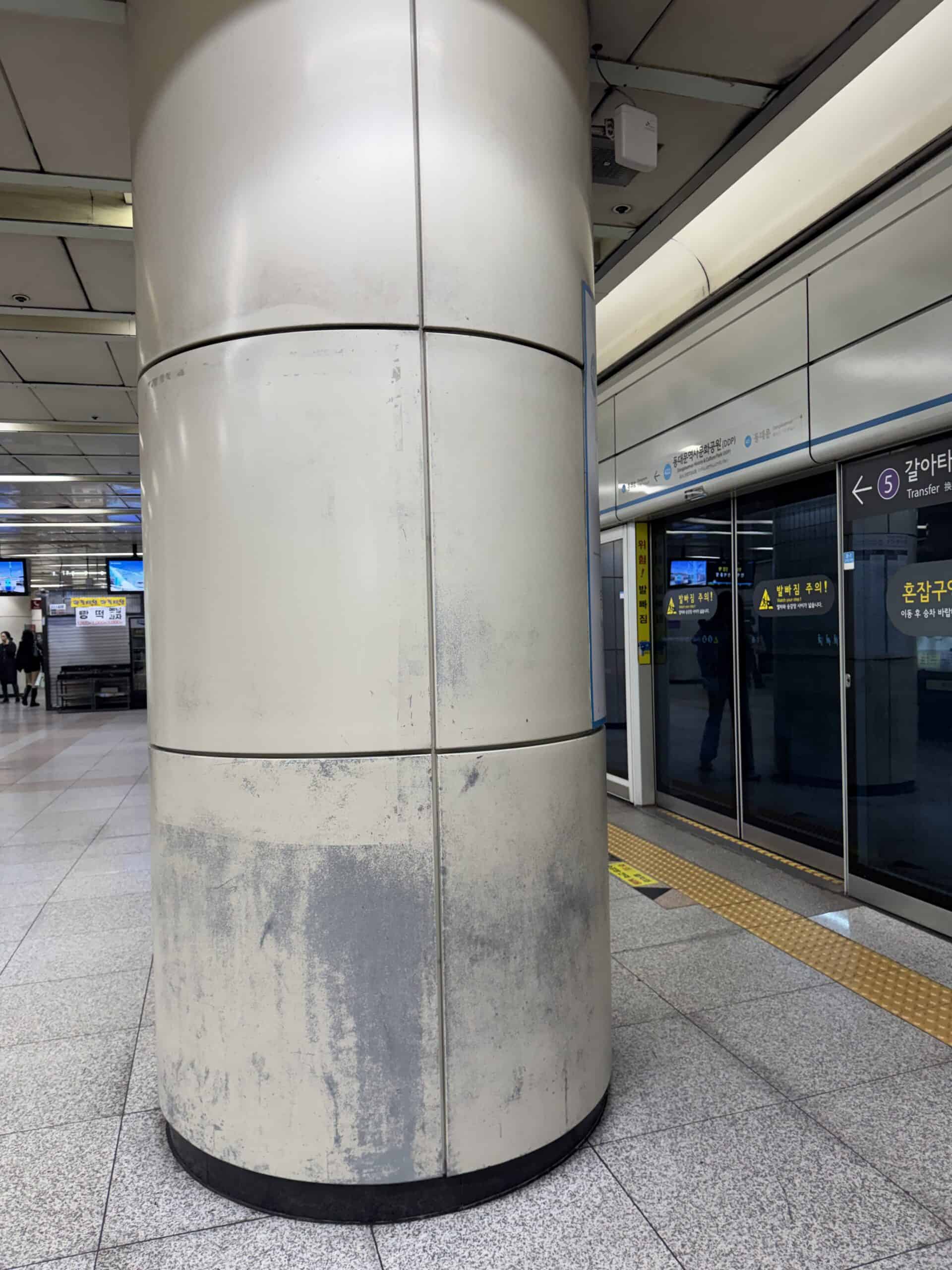
Column bases endure frequent low-level physical impacts from luggage wheels and cleaning carts, leading to paint peeling and bare metal exposure
3. Vulnerability to Gouges and Micro-Scratching
Standard organic paint coatings lack the structural surface density needed to withstand sharp physical contacts. Daily commuter interaction—such as contact from keys, umbrella tips, bag hardware, or maintenance tools—creates cumulative micro-scratches and deep gouges on panel surfaces. Because organic coatings cannot self-heal or resist mechanical indentation, these scratches compromise the protective finish, trapping dirt and making localized spot repairs impossible without a complete panel recoat.

Sharp objects easily cut through soft organic coatings (pencil hardness 2H–3H), leaving permanent gouges that trap grime and cannot be locally repaired

Daily commuter contact creates dense networks of micro-scratches across organic paint layers, permanently dulling the wall surface under station lighting
The Advertising Sticker Dilemma: A Major Maintenance Headache
Commercial advertising wraps generate significant revenue for transit operators, but removing vinyl decals creates severe hidden costs on conventional wall panels:
- Paint Peeling & Delamination: Pressure-sensitive adhesives (PSA) on ad stickers chemically bond with organic paint resins. When workers strip old ads, the adhesive often pulls the paint layer directly off the metal backing.
- Scraper Blade Gouging: Maintenance crews routinely use metal scrapers or putty knives to peel sticker edges. On standard painted aluminum (pencil hardness 2H–3H), scraper blades leave deep, irreversible gouges across panel faces.
- Chemical Hazing & Solvent Attack: Removing stubborn glue residue requires aggressive solvents like acetone, MEK, or xylene. These organic solvents dissolve paint binders, leaving permanent cloudy stains, discoloration, and sticky patches.
- Adhesive Ghosting: Adhesive chemicals migrate into the microscopic pores of painted surfaces, leaving permanent outline shadows ("ghosting") of previous campaigns under station lighting.
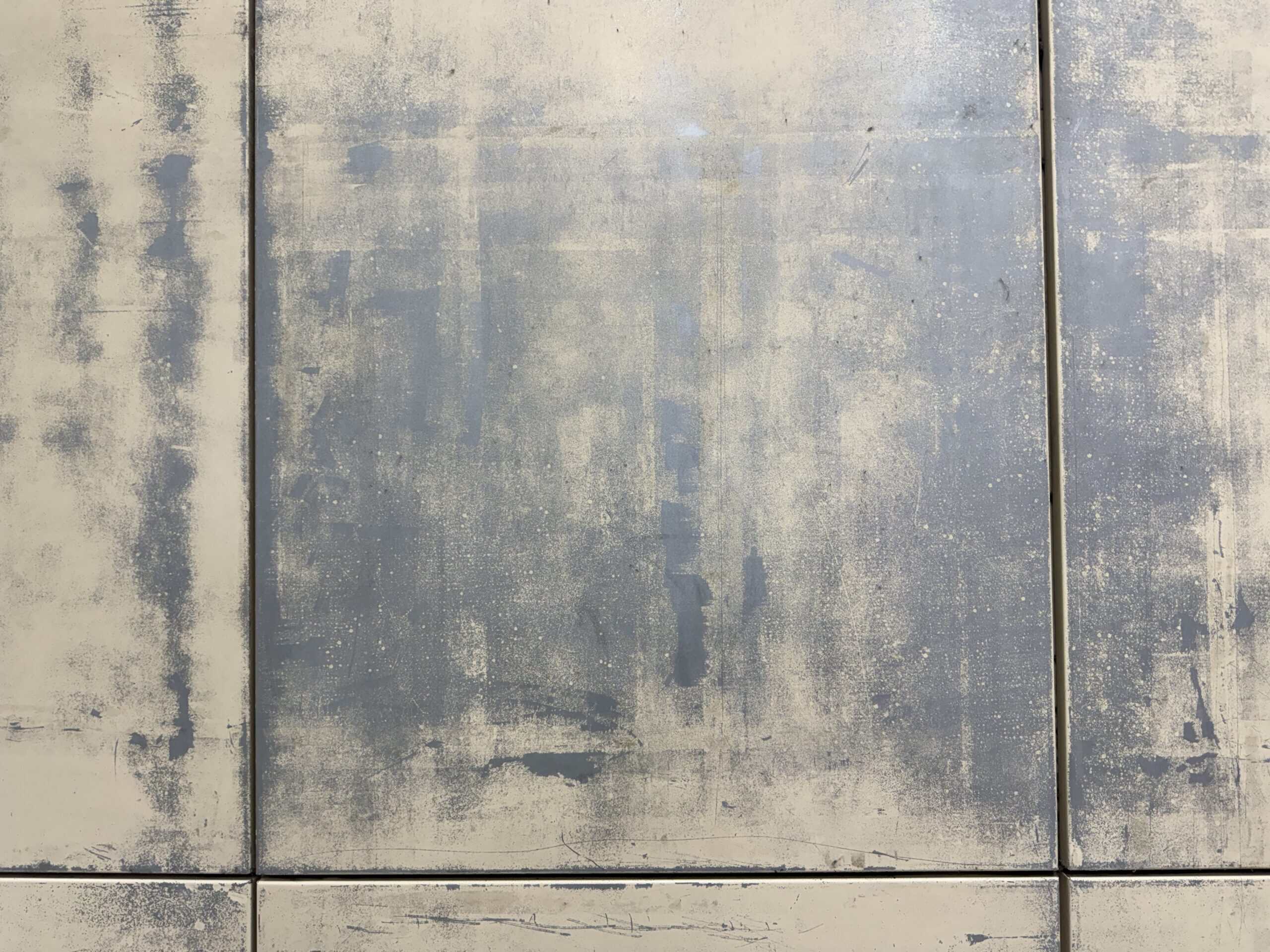
Aggressive cleaning solvents and sticker scraper tools accelerate organic paint breakdown, leaving mottled, degraded surfaces that demand full panel replacement
How TECO Vitreous Enamel Panels Eliminate Sticker Damage
TECO VE Panels feature an inorganic glass surface fused to steel at temperatures exceeding 800°C:
- Impervious Glass Surface: Adhesives cannot penetrate or chemically react with the non-porous glass glaze.
- Mohs Hardness 5–6 Scratch Resistance: Scraper blades glide over TECO's glass-hard surface without leaving a single mark.
- 100% Solvent Immunity: Maintenance teams can use harsh chemical adhesive removers, acetone, or graffiti removers endlessly without dulling the surface gloss or causing color shift.
- Zero Ghosting: Ad decals peel off cleanly, leaving the panel in pristine original condition for the next ad wrap.
TECO Vitreous Enamel Panels: Technical Performance Standards
TECO manufactures Vitreous Enamel Panels under stringent international quality and performance protocols, ensuring full compliance with major public transit infrastructure requirements:
Technical Property | Testing Standard | TECO Performance & Specification |
|---|---|---|
Fire Performance | EN 13501-1 / BS 476 Part 4, 6 & 7 | Class A1 / Class 0 Non-Combustible; zero toxic smoke or toxic gas emission during fire scenarios. |
Acid & Chemical Resistance | ISO 28706 | Class AA / High Acid Resistance; immune to chemical cleaning agents, atmospheric pollutants, and acidic/alkaline compounds. |
Vitreous Enamel Quality | ISO 28722 | Premium architectural porcelain enamel glass fusion ensuring lifelong bond integrity with zero risk of delamination. |
Surface Hardness & Scratching | EN 101 | Mohs Hardness 5–6; superior mechanical resistance against razor blades, keys, and heavy commuter wear. |
Weathering & Color Retention | ASTM C538 / ISO 28722 | Zero Color Fading / 100% UV Resistance; inorganic color pigments remain vibrant for over 50 years. |
Standard organic paint systems often fail prematurely when subjected to frequent chemical cleaning. In contrast, TECO vitreous enamel panels are engineered for complete chemical immunity. To review third-party lab verification of our material performance, you can access our official technical testing results.
Lifecycle Cost (LCC) Comparison for Transit Authorities and Operators
While initial material selection affects CapEx, long-term operational costs (OpEx) dictate true infrastructure value. The table below compares the 50-year lifecycle cost profile of conventional painted metal panels against TECO Vitreous Enamel Panels:
Wall Cladding Solution | Initial Capital Expenditure (CapEx) | 50-Year Operational Expenditure (OpEx) | Total Lifecycle Cost (Total LCC) |
|---|---|---|---|
Conventional Painted Metal Panels (Organic Paint / Powder Coating) | Moderate | Extremely High (Repeated repainting, panel replacements, scraper gouge repairs, and ad sticker residue damage) | 🔴 High Total LCC (Frequent OpEx bloat & early replacement) |
TECO Vitreous Enamel Panels (Inorganic Glass-Fused-toSteel) | Optimal | Minimal (Zero repainting, easy non-abrasive cleaning, 100% solvent & scratch resistance) | 🟢 Lowest Total LCC (50+ years design life matching station structure) |
- Elimination of Mid-Cycle Panel Replacement: TECO VE panels match the 50+ year design life of underground station civil structures.
- Reduced Maintenance Downtime: Quick ad sticker removal and easy cleaning allow nighttime maintenance crews to complete work faster without damaging station assets.
- Preservation of Public Asset Image: Stations maintain a clean, brightly lit, high-end appearance for decades without visible aging or wear.
Superior Architectural Cladding for Mass Transit
From concourse walls and escalator runs to platform columns and edge door surroundings, TECO Vitreous Enamel Panels deliver unmatched durability, absolute fire safety, and total resistance against scratch and ad sticker damage.
By adopting TECO VE panels, metro operators drastically reduce station maintenance downtime, lower long-term operating expenses (OpEx), and protect the enduring value of public transit assets.
Planning your next rapid transit project?
Contact TECO Team today to discuss your transit network requirements and explore how our cladding solutions minimize Total Cost of Ownership (TCO) across your facilities.


